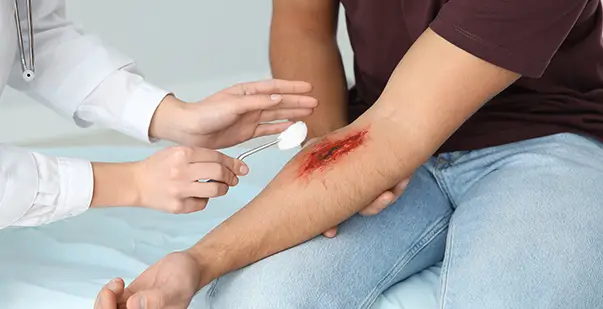
Can you guess which health condition affects more Americans than heart failure, costs the U.S. healthcare system more than $25 billion every year, and rarely makes the evening news? The answer is chronic wounds. Today, roughly 10.5 million Medicare patients live with non-healing wounds. With an aging population and rising rates of diabetes and obesity, these numbers are steadily climbing. However, when they are treated in the right way, these wounds heal fast, infections are prevented, and patients get healthy.
That is why there is a rising demand for certified nurses and clinicians with specialized, up-to-date wound training. If you are a healthcare worker and want to upgrade your wound care expertise, then certification is the best way to move forward. In this guide, let’s look at the different types of certifications, understand various wound care certification requirements, and find the best one for your career.
Read More: Top 5 Online Wound Care Certification Programs in 2025
Why Get Certified in Wound Care?
Pressure injuries alone affect about 1.3 million Americans every year and cost the healthcare system billions. According to an article published in the International Wound Journal, when clinicians follow evidence-based protocols, healing times can drop by 50% or more, and serious complications become far less common. Certification shows that you know those protocols thoroughly. Many wound-care nurses report that the credential opened doors to wound-team positions, higher pay, and the satisfaction of seeing wounds finally close after months of struggle.
Different Types of Wound Care Certification
In 2025, the vast majority of healthcare providers will pick one of these three pathways:
Wound, Ostomy, and Continence Nursing Certification Board (WOCNCB)
WOCNCB offers three nursing-focused wound credentials. These are considered the gold standard for healthcare providers. They include
Certified Wound Care Nurse (CWCN)
Certified Wound and Ostomy Nurse (CWON)
Certified Wound, Ostomy, and Continence Nurse (CWOCN)
American Board of Wound Management (ABWM)
ABWM provides two popular interdisciplinary credentials that are accepted nationwide. These are:
National Alliance of Wound Care and Ostomy (NAWCO)
NAWCO is the fastest-growing credential. It is most accessible and awards Wound Care Certified (WCC). Each has slightly different requirements, timelines, and career focus.
Here’s a detailed comparison between these certification boards based on various parameters:
Parameters | WOCNCB | ABWM | NAWCO |
Who It’s Best For | | Licensed Practical Nurse (LPNs) RNs Physical Therapist(PT) Occupational Therapist(OT) Physical Therapist Assistant(PTA) Physician Assistant (PA)
| |
Minimum License / Degree | Active RN/APRN license + current AHA BLS | Any active U.S. healthcare license | Active U.S. healthcare license |
Wound Care Certification Criteria | Accredited WOCN program OR Experiential route (ends 12/31/2026): 50 CE + 1,500 hrs OR Graduate-degree + post-grad certificate | 16-hour approved wound course (within the last 3 years) | Approved skin & wound course (24–40 hrs) OR 120 precepted hrs OR 2 yrs FT / 4 yrs PT wound experience |
Clinical Hours Required | 160+ precepted (program) or 1,500 (experiential) | None beyond license | 0–120 hrs (with course) |
Typical Timeline | 6–12 months | 1–3 months | 1–3 months |
Exam Details | 120 questions, 2.5 hrs | 100 questions | 100 questions (often same week) |
Recertification ( CE Requirements) | 80 PGP points every 5 years | 30 CE hours every 3 years | 20 CE hours every 2 years |
Read More: WOCN vs. Wound Certification: What Sets Them Apart?
Quick Wound Care Eligibility Checklist You Can Use Today
If you are a healthcare provider who wants to find out your eligibility for getting certified, then here’s a simple, step-by-step checklist. Run through it once, and you’ll know exactly where you stand.
Active License
Candidates should have an unrestricted professional license. The appropriate state board should issue it. To verify the documentation, the applicant can check the primary source from the state board. After verification, healthcare providers can move forward using various resources, like online courses.
Clinical Experience
The next eligibility criterion is the candidate's working hours. According to the certification you choose, these numbers may vary from 160-1500 hours. However, some certifications require only approved educational courses. For this, the healthcare provider can simply keep logs of dates and their work. They can get it verified by their managers. The good news is that daily work also counts.
Related Education
These specialized courses are add-ons. That's why you need some educational background in healthcare, depending on the different board requirements (Refer above table). For instance, basic nursing training. Additionally, different healthcare providers, including nurses, medical professionals with basic training, and therapists, are eligible.
AHA BLS Card
Almost every wound-care board only accepts American Heart Association Basic Life Support (not other providers). Be sure to check the expiration date. If the card expires within the next six months, the renewal can be done online. You can visit the American Heart Association (AHA) official website and verify your card status directly.
Documentation
To get the application approved, the applicant needs to prove that they have all the requirements. This includes your official records, such as your educational transcripts, along with your professional license and signed logs of your clinical hours. This also includes the aforementioned AHA BLS Card. This makes sure there are no unnecessary delays.
Fee for Exam and Courses
The required fee covers both the application process and the exam. Everything is paid online, so once your documents are ready, you can submit them the same day. Once you are done, you can start on your training. Online wound care certification courses are great options, starting from $49 USD.
Disclaimer: Prices may vary based on location, provider, or certification requirements. Please verify fees before enrolling.
Which Nursing Certification Guide Fits Your Career Right Now?
Nurses often get puzzled over wound care certification requirements, wound care eligibility, etc. To help you out, we have listed different scenarios faced by nurses while choosing their certifications. Pick the row that feels the most to you. Pro tip – the right online course made it far easier (and faster) than expected. Here is the list:
S.No | Situation | Best-Fitting Credential | Why It Fits & Typical Timeline |
1 | “I’m an RN who loves wound care and wants the credential that carries the most weight with hospitals and wound teams.” | WOCNCB (CWCN/CWOCN) | It takes 6–12 months, but doors open fast afterward. |
2 | “I’m a busy bedside nurse or LPN and just need something that I can finish quickly.” | NAWCO WCC | A lot of nurses complete it in a long weekend course, with the exam. Done in 1–3 months. |
3
| “I already have my BSN and want to work in a wound clinic or home health where they specifically ask for ‘CWS preferred’ in the job posting.” | ABWM CWS | Includes everything required for the job. Takes 3-12 months. |
4 | “I’m a PT, OT, or PTA and my clinic wants someone certified within a year.” | ABWM CWCA | Fastest entry for non-nurses, often done in weeks
|
5 | “I want to help in more complex cases, and gain knowledge about hyperbaric certification.” | Any core credential first, then ABWH hyperbaric certification | Build the foundation, then add the hyperbaric specialty later |
Read More: Top Study Tips to Pass Your Wound Care Certification Exam
Your Wound Care Certification Requirements Made Simple
Wound care certification requirements are straightforward once you see them laid out. Most nurses need to gather their license, BLS, hours, and maybe one short course. Pick the credential that fits your routine and apply. That’s it!
If you’re ready to take the next step, check your eligibility today and start the online wound care certification course – patients are waiting for clinicians who truly understand modern wound care.
FAQs
How long does it take to get wound care certified?
Most nurses finish in 1–12 months. The fastest option (NAWCO WCC or ABWM CWCA) is usually 1–3 months with an online course and exam. The full WOCNCB program takes 6–12 months.
Do I need a BSN to get wound care certification?
No. LPNs/LVNs, PTs, and others can earn respected credentials (WCC, CWCA). A bachelor’s degree is only required for the ABWM CWS credential.
How much does wound care certification cost?
Expect $300–$550 for the application and exam fee, plus the cost of the required course ($49–$2,000 depending on length and provider). Many employers also offer tuition reimbursement.
Can I take the wound care course online?
Yes. All major boards approve fully online or hybrid courses. Thousands of busy nurses complete them while still working full-time. You can check out our wound certification course for yourself. It offers flexible, board-approved options so you can get the certification you need.
Reference: